5 Reasons to Replace a Rutted Driveway with Tarmac
Ruts are more than an appearance issue. They show that a driveway surface, its supporting layers or both have moved under repeated vehicle use. These channels can collect water, make access uncomfortable and continue to deepen if the underlying cause is not corrected.
For homeowners in Rochester, Kent, replacing a badly rutted driveway with properly installed tarmac can create a smoother and more dependable surface. The key is to rebuild any unstable areas before laying the new material, as tarmac should not simply be applied over existing movement.
Why Tarmac Is a Practical Replacement for a Rutted Driveway
Tarmac forms a continuous surface that can accommodate a wide range of driveway shapes. When it is supported by a correctly prepared sub-base, secure edges and suitable drainage, it offers a strong solution for regular residential vehicle use.
1. It Creates a Smooth and Consistent Surface
Deep wheel tracks, raised sections and loose material can make a driveway uncomfortable to drive and walk across. They may also make it difficult to position vehicles evenly or move bins, bicycles and garden equipment.
Tarmac is laid and compacted to form a uniform surface without the irregular channels associated with rutting. Accurate levels can also create smoother transitions between the driveway, pavement, garage and surrounding paths.
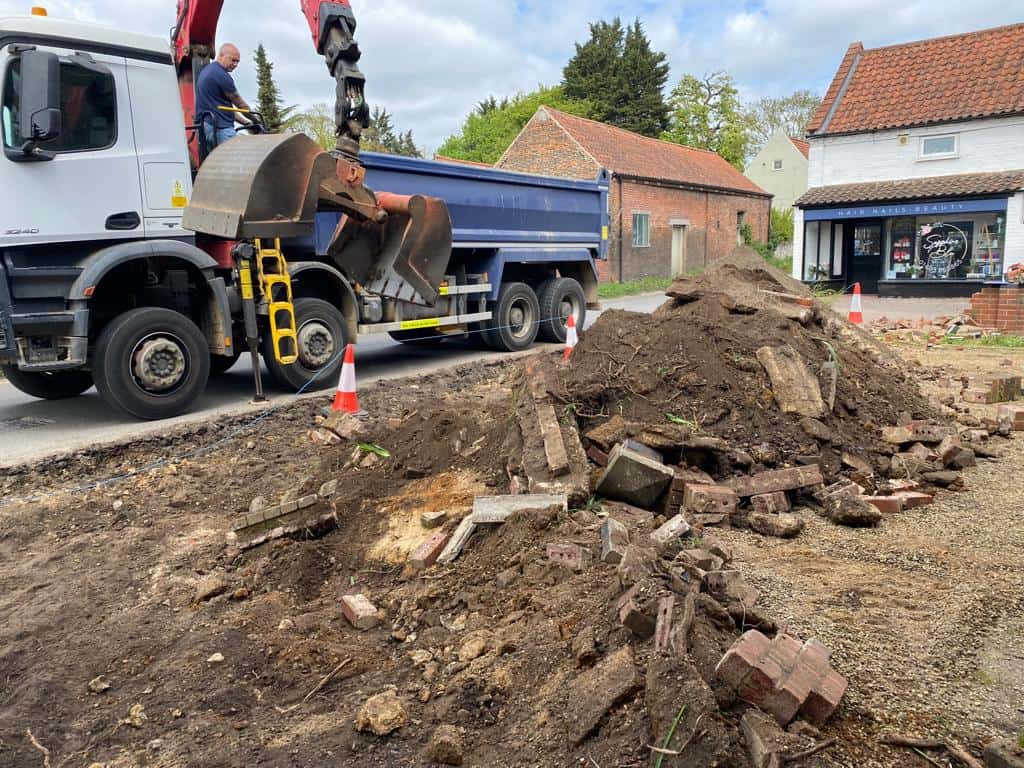
The existing ruts must first be excavated and assessed. Filling them at surface level alone may leave the weak material beneath them untouched.
2. It Allows the Foundation to Be Corrected
Ruts often develop because the sub-base is too shallow, poorly compacted or weakened by water. Heavy use may then compress the affected areas, leaving visible wheel tracks.
Replacing the driveway provides an opportunity to investigate and correct these underlying problems. The work may include:
- removing unstable surface material
- excavating soft or moving ground
- rebuilding weak sub-base sections
- compacting aggregate in controlled layers
- strengthening vulnerable edges
- correcting unsuitable surface levels
This preparation is essential because the finished tarmac can only perform as well as the structure supporting it.
3. It Can Improve Rainwater Management
Rutted areas frequently hold water after rainfall. Instead of flowing away, water settles in the low channels and may work into cracks or loose sections.
During replacement, the driveway can be formed with consistent gradients that direct water towards the intended drainage points. Correcting low spots and transitions helps prevent the same puddles from returning.
Water management should be planned before the tarmac is laid. A smooth finish alone will not solve drainage problems if the overall levels continue to direct water into the wrong area.
4. It Provides a Durable Surface for Regular Vehicle Use
A driveway must tolerate repeated loading, braking and turning. These forces are concentrated around wheel tracks, parking positions and entrances, which is why weak surfaces often deteriorate in predictable areas.
A professionally constructed tarmac driveway distributes vehicle loads through its compacted surface and supporting layers. The continuous finish also avoids the loose channels that can develop in worn granular driveways.
Particular attention should be given to:
- regular parking areas
- narrow vehicle entrances
- turning points
- slopes
- driveway edges
- connections with other surfaces
Planning these areas carefully helps the new driveway respond to how it will actually be used.
5. It Gives the Property a Cleaner, More Defined Entrance
A rutted driveway can make the front of a property appear tired and poorly maintained. Uneven tracks, standing water and scattered loose material may distract from the surrounding garden and exterior.
New tarmac creates a simple, consistent finish that can suit both straight and irregular driveway layouts. Defined edges can provide a neat boundary against lawns, planting areas or paths, while contrasting kerbs or blocks may be used to add detail where appropriate.
The result is a more organised entrance that remains practical rather than overly decorative.
When Is Replacement Better Than Repair?
Localised repairs may be suitable when rutting is shallow and limited to one stable area. Replacement or substantial reconstruction becomes more appropriate when:
- ruts extend along several wheel tracks
- repaired sections continue to sink
- loose material is spreading
- water regularly collects in depressions
- the driveway moves under vehicle weight
- widespread cracking accompanies the rutting
- the existing foundation is inconsistent
A professional assessment can establish whether the entire driveway has failed or whether only certain sections require rebuilding.
Why Tarmac Must Not Be Laid Directly Over Unstable Ruts
Covering ruts without correcting their cause may temporarily improve the appearance, but the underlying movement can transfer into the new surface. Depressions and cracks may then reappear in the same places.
Proper replacement involves removing unsuitable material, establishing stable levels and compacting each construction layer. Edges and drainage also need to be incorporated into the overall design.
This method gives the tarmac a sound platform and is central to achieving a dependable finish.
Conclusion
Replacing a rutted driveway with tarmac can provide a smoother surface, improve water run-off, support regular vehicle use and give the property a cleaner entrance. More importantly, replacement creates an opportunity to correct the weak foundation or poor levels that caused the rutting.
The condition beneath the existing driveway should always determine the preparation required. If your driveway in Rochester, Kent has developed deep or recurring wheel tracks, Rochester Driveways & Surfacing can assess the surface and recommend the appropriate construction work. Contact the team to discuss a professionally installed tarmac driveway.
Call us on: 01634 564 093
Click here to find out more about Rochester Driveways & Surfacing
Click here to complete our contact form and see how we can help with your driveway needs.